Join Us
Sign up to stay informed of the latest news from Cristianime i Justícia.
In the face of the hells created by violence, oppression, and repression, the victims of injustice seem to have no other alternative than fight (action-reaction) or flight (silent submission). This booklet explores the “third way” of Jesus, which goes far beyond those two options. This “third way” is the path of active non-violence, a path that requires great lucidity, creativity, faith, and constancy. It comes out of a long biblical tradition, and it acquires special meaning in the context of our present-day society. [In addition to the translation into Catalan and Spanish that you can find on this website, the text has been translated into German, which you can find at this link].
When we speak about government finance and taxes, we are confronted with a lot of questions: do we pay too many taxes? are they really put to good use? could we save on them? does it make sense for me to pay taxes when there is so much government corruption? For a long time the question of tax policy has been left out of political and social debate. Only in recent years, with the impact of economic crisis and globalization, are we again focusing on this question that is crucial for maintaining our welfare states. The debate about tax policy leads us to a further discussion about what model of society we desire and how we want to finance it. After 27 years Cristianisme i Justícia wants to address once again the tensions and the questions involved in creating a just fiscal system, one that fosters social solidarity. Such a system is an essential element in the fight against inequality.
Change and social transformation, addressed form a polyhedral point of view, are the central issues of this booklet.
In a time where it seems the course of history is accelerating, we reflect on the present time drawing from some of the most relevant political events in the last years; we make an approach to the notions of change and transformation and, finally, we take a closer look to some of the areas from which we can work for social change and transformation, attempting to start from a hopeful gaze over reality although this is not always easy.
A booklet which, on a personal basis, seeks to inspire and encourage others to work from their everyday sphere, from both an individual and a collective dimension, and help to breed a new dignifying reality for all.
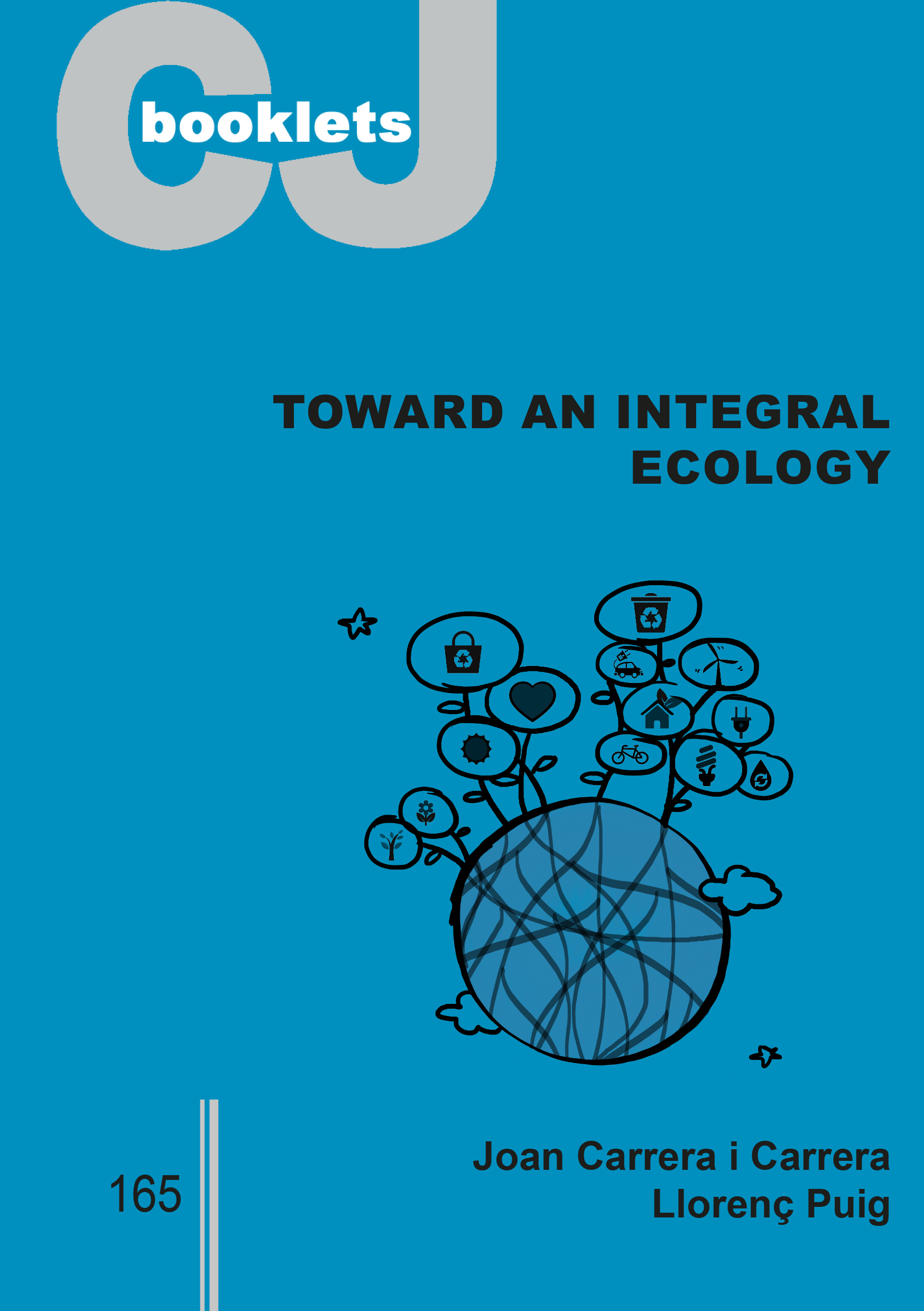
“We are faced not with two separate crises, one environmental and the other social, but rather with one complex crisis which is both social and environmental.” Beginning with this central thesis of Laudato Si´, this booklet presents for us the key ideas and values of the encyclical. It also recommends ways in which we can overcome the justice/environment dilemma since fighting against poverty and caring for the planet are both part of the same struggle. The path toward an integral ecological ethics thus becomes the only possible way out of the dead-end into which we have been led by the present system of production and consumption.
In the thirty-fifth year of its existence, Cristianisme i Justícia now issues its 200th booklet. We have always sought to kindle hope and feed a widely-shared desire for a world that is more just and more fraternal. In keeping with that desire and alert to the world around us, the present publication aims to provide a clear account of the teamwork in which our Centre is engaged, and a reliable guide to the challenges on which Cristianisme i Justícia reflects now and in the future. We also invite to join us all those engaged in dialogue between faith and the struggle for a juster world.
The Tenth European Congress of Jesuit Alumni was coming to an end. On the afternoon of August 1, 1973, the closing session was solemnly convened. Then Fr. Arrupe, with his usual energy and enthusiasm and perhaps even more, gave the following conference. Limitations of time did not permit him to read the whole text, but the Acts of the Congress later published it as written. A conference that would change the Society of Jesus.
The present environmental crisis has its origins in how we relate to the natural world and to our fellow human beings. Certain values are given priority over others, thereby shaping attitudes widely shared across the globe. The pope's encyclical Laudato Sí’ proposes something different, fresh ways of looking at things, a new culture, based on values that although, sadly, not always acted on, belong equally to humanism and to the Christian tradition, and that can be shared by many other ethical and religious traditions too.
Morning, 9h to 14h
(from monday to friday)
Afternoon, 16h to 19h
(tuesday and thursday)