Join Us
Sign up to stay informed of the latest news from Cristianime i Justícia.
“Christianity should give a reason for its hope to anybody who asks for it, no matter the historical circumstances or the state of the soul with whomever it faces the future culturally. But in no case can its characteristics, favorable or not to intrahistorical hope, condition the content of the theological virtue of hope, given that it depends exclusively on the Promise of God.” It is about this Christian hope and its reasons that F. J. Vitoria speaks to us in this delicious essay, an essay that can give us a little bit of light in times of uncertainty and darkness.
In November 2023, a group of families from the Poblenou neighborhood in Barcelona decided to respond to the growing unease caused by an unquestioned social consensus: that starting high school was the right time to give their sons and daughters a smartphone. The movement gained more traction than expected, and thousands of families from across the country joined in. One of the most active participants, Xavier Casanovas, explains here —in a brief and clear way— the reasons that led them to call for putting technology back in its rightful place before it's too late.
At the end of each year, at Cristianisme i Justicia we try to reflect on the present moment with the goal of pointing out some possible lines of thought that can act as suggestions for the construction of a new future. Along these lines, we propose today this exercise in sociopolitical imagination arises from the will to recover and rescue some words from being held hostage and from the twisted appropriation that is given to them by post-Fascism. Facing this affront, our little dictionary tries to drag into the light the feelings forgotten by those of us who serve everyone in our shared journey toward global justice.
Refuting the cliché that crying is useless, this booklet maintains that, given our current context of insensible neoliberal globalization, public expression of suffering is an essential form of political criticism. This is so not only because weeping reveals to others our interior affliction, but also because our crying together with others and for others turns our mourning into a sign of empathy, protest, criticism, outcry, and resistance.
This publication is about conversation, about its conditions of possibility in a world where distraction and dispersion have impoverished it to limits we could not even suspect. And the framework or tradition from which the author speaks to us is that of Ignatian spirituality, a spirituality whose central place is precisely in conversation. As the author says: “The first requirement for spiritual conversation is to listen. To listen deep down, to acknowledge the other and his presence, to show compassion and not just walk on by. And then ask. There is no interest in the other without good questions; there are no good questions without spiritual interest in the other. Talking and helping go together, they are inseparable”.
Sequestration. Everyone understands what that means. It is to appropriate something, to make someone or something of interest disappear. The sequestration of truth, therefore, what does that mean? What is it that has disappeared? The truth. And this disappearance gives way to the absence of truth, to post-truth. If we have been robbed of the truth, what is left is what comes after truth. If we think about it, that is strange. To a certain extent, it is a worse option than a simple lie.
At the end of 2022, ChatGPT was released to the general public; it is a softwareprogram trained to reproduce human language and to answer any question it is asked. The fact that this softwarehas learned to offer non-predetermined responses, thanks to the vast amount of information fed into it, has put the expression artificial intelligence (AI) on everyone's lips. We now have a tool capable of composing everything from an unpublished romantic poem in the style of Goethe to an academic paper comparing two authors who have never previously been studied together— and doing so better than 99% of mortals! A program like this raises many questions for us: Is AI really intelligent? Where is its novelty? What will be the consequences of its being widely used? Will it help to improve our world? What can we expect?
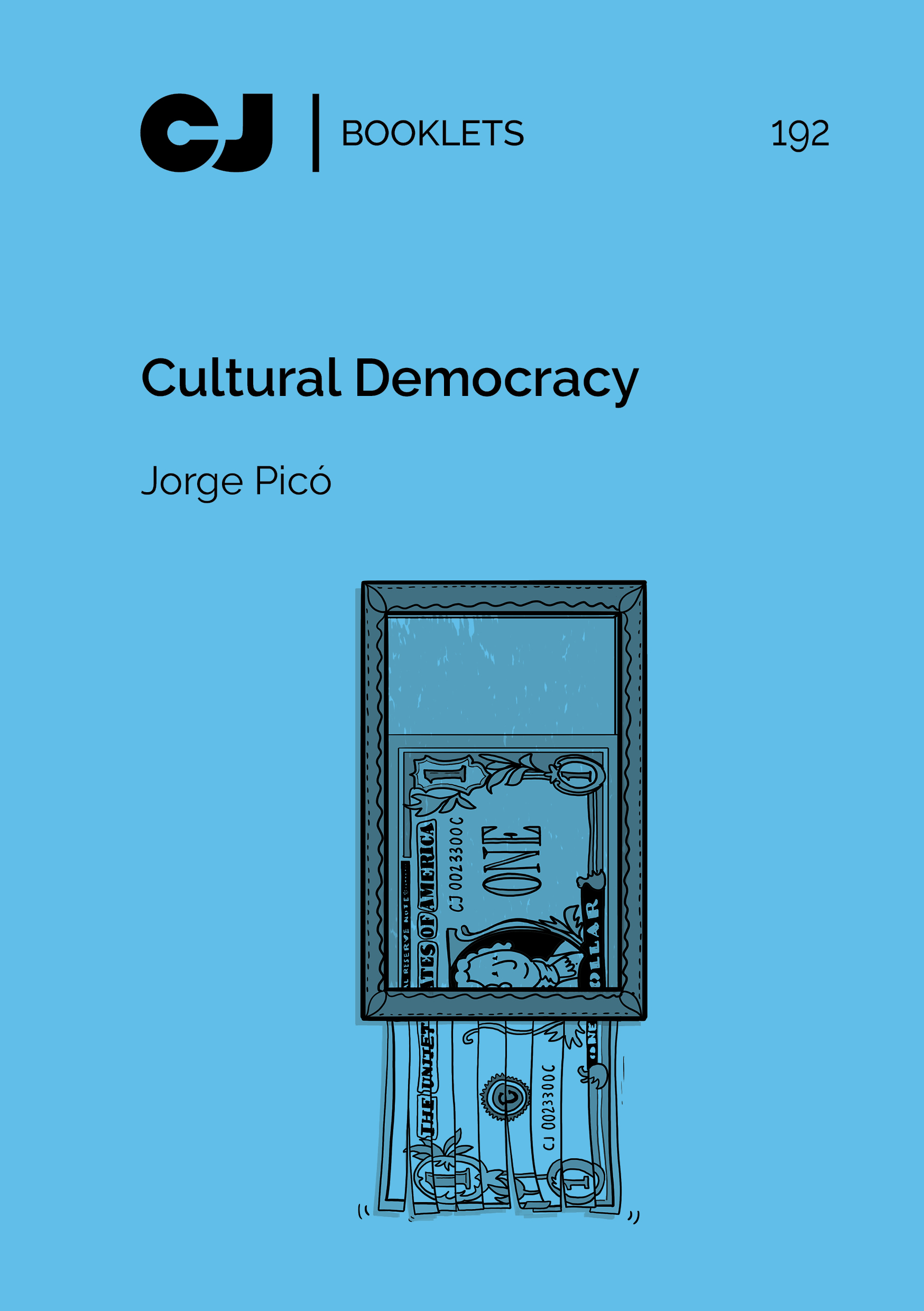
The title of this Booklet joins two words, democracy and culture, that mutually support each other like exhausted travelers in the middle of their journey. The tiredness of the word democracy is due to the fact that it designates a tarnished reality, eroded at its foundations by economic globalization, the power of the great industries, techno-politics and populism. The word culture has arrived at the same state because it has lost critical and Utopian stamina in going from being a noble ideal and an antidote against power to being a vassal. In spite of that, the author defends the fact that beauty and art cannot be measured by their utility or their lack thereof and that there is an emotional movement when dealing with beauty that can be lived as the herald of a better world.
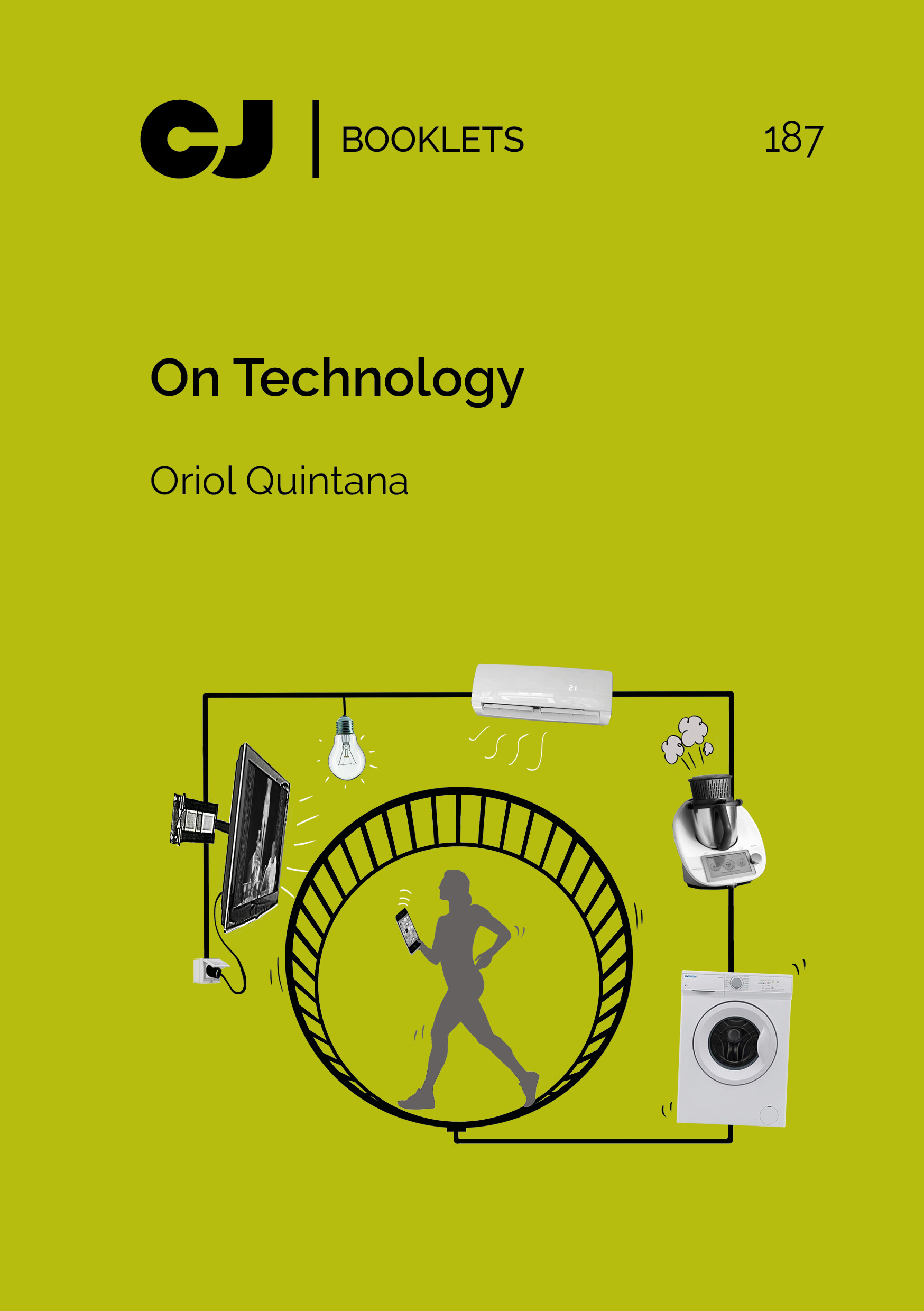
Why do we assume that jumping over the limits imposed by nature and social customs is the right thing to do? What consequences are there for our lives by uncritically assuming the technological mentality? Is there some way to escape from this labyrinth? These are some of the questions that the author poses in this pamphlet, written from a philosophical point of view and attempting to go to the roots of a question that is not only technical or scientific, but also affects that which is most central to the human condition.
From a Christian and human perspective, all spiritual searching is something positive, but it requires a special effort of introspection and self-criticism. Some elements of Christian theology are indispensable and cannot be downplayed, since Christian theology must be done from the perspective of “the least and the last” of this world. It is to this debate that the present booklet seeks to make a contribution; it is the fruit of the reflection of a complete course in the theology seminar of Cristianisme i Justícia.
Morning, 9h to 14h
(from monday to friday)
Afternoon, 16h to 19h
(tuesday and thursday)